Flowpixy
Arc Grid
Arc Grid
Couldn't load pickup availability
Share
Self-paced learning overview
- 🎓 Digital learning materials
- 🗂️ Organized course modules
- 🔐 Secure checkout
- 🆕 Updated for 2026
1. Problem Statement
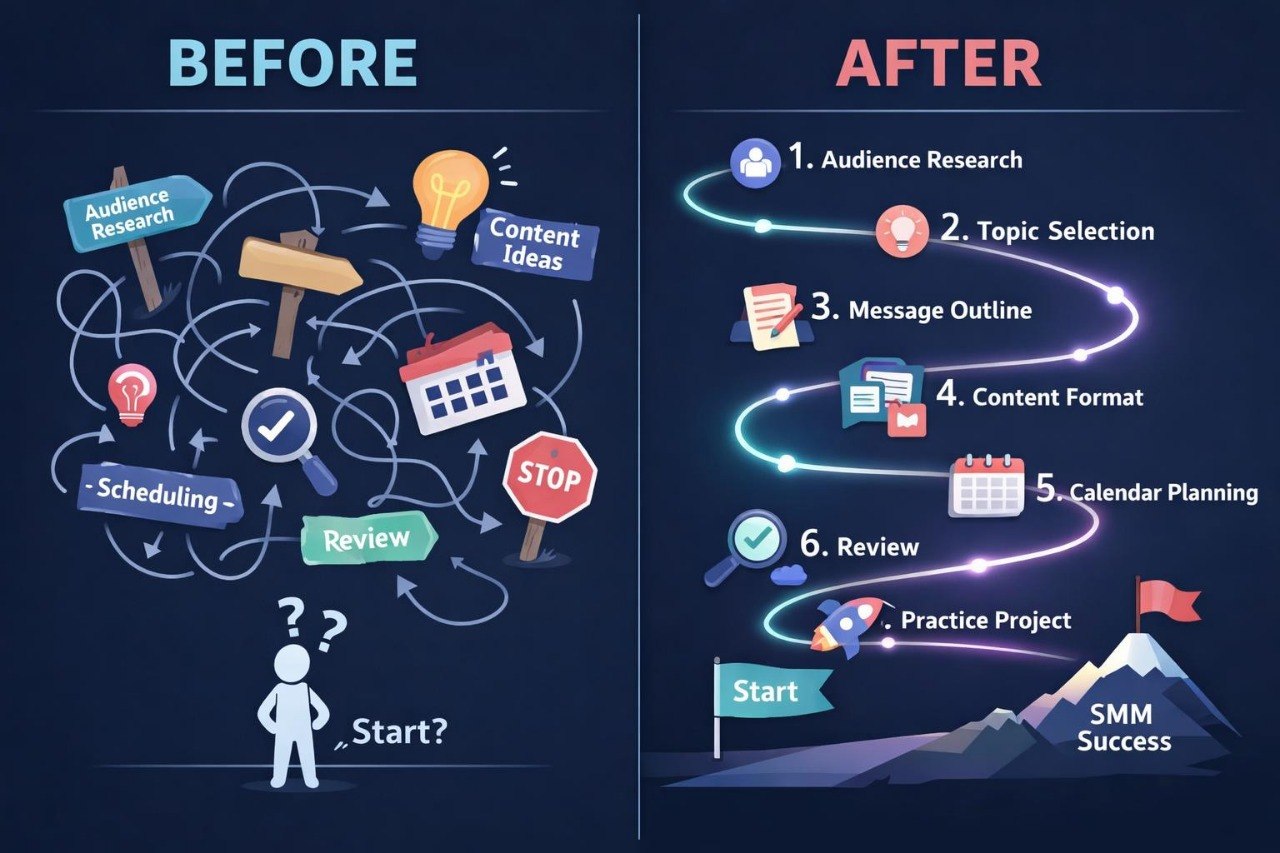
Struggling to connect all stages of SMM planning into one coherent process? You're not alone. Many learners understand individual tasks such as audience research, topic selection, message writing, scheduling, and review, but still find it difficult to combine them into a single working structure. When these stages remain separate, content may lose direction, repeat earlier ideas, or fail to support the wider communication plan. It can also become harder to review what has already been prepared and what still needs development. Arc Grid was created to help learners bring each stage together within one detailed and organized learning path.
2. Solution
This course will teach you how to build a complete SMM workflow from research and planning to review and revision. You will learn how to define a communication direction, organize audience observations, develop topic groups, prepare message structures, arrange materials within a calendar, and evaluate the completed plan. The course explains how each stage influences the next and how to maintain consistency across a broader collection of materials. It also introduces methods for identifying gaps, adjusting topic balance, refining communication flow, and updating the plan after review. Arc Grid supports independent learning through detailed modules, worksheets, comparison tasks, and a complete practice project.
3. What’s Inside
Module 1: Workflow Foundations — you will learn how the main stages of SMM planning connect and why each stage needs a clear role within the wider process.
Module 2: Direction and Scope — you will explore how to define the subject area, communication purpose, audience focus, and boundaries of a content project.
Module 3: Audience Research Grid — you will learn how to organize audience questions, interests, communication needs, and recurring observations into a structured reference.
Module 4: Topic Architecture — you will study how to create main themes, supporting topics, related subtopics, and clear connections between them.
Module 5: Message Structure — you will learn how to prepare message outlines with a clear opening, central point, supporting details, and closing direction.
Module 6: Format Planning — you will explore how to match different topics with suitable formats, levels of detail, and presentation approaches.
Module 7: Content Sequence — you will learn how to arrange related materials so that each topic develops naturally across a longer planning period.
Module 8: Calendar Design — you will study how to distribute themes, formats, and communication purposes across a structured publication calendar.
Module 9: Consistency Review — you will learn how to compare tone, terminology, message structure, topic balance, and visual notes across multiple materials.
Module 10: Gap Analysis — you will explore how to identify missing topics, repeated ideas, uneven distribution, and unclear transitions within a content plan.
Module 11: Revision Framework — you will learn how to update the plan by changing sequence, refining messages, adjusting formats, and improving connections between materials.
Module 12: Complete Arc Project — you will create a full sample SMM framework that includes research notes, topic architecture, message outlines, format choices, calendar planning, review, and revision.
4. Who Is This For?
✅ Good fit if you:
- want to connect all major stages of SMM planning;
- already understand basic content organization;
- need a detailed framework for broader communication projects;
- want to improve planning, review, and revision skills;
- prefer structured independent learning with detailed exercises.
❌ Not for you if:
- you expect immediate commercial outcomes;
- you are looking for claims about clients, payment, or employment;
- you want instructions connected to named platforms;
- you do not plan to complete detailed planning and review tasks.
5. What You’ll Learn
- How to connect research, planning, writing, scheduling, and review.
- How to define the scope and direction of a content project.
- How to organize audience observations within a structured grid.
- How to create a clear topic architecture.
- How to prepare detailed message outlines.
- How to match topics with suitable formats.
- How to build a connected content sequence.
- How to design a balanced publication calendar.
- How to review consistency across a wider set of materials.
- How to identify gaps, repetition, and unclear transitions.
- How to revise a plan after structured evaluation.
- How to create a complete SMM framework for independent practice.
6. Review Period
Arc Grid includes structured course materials for independent learning. If the course does not meet your expectations, you may request a refund within 30 days according to the store policy. This gives you time to review the materials and decide whether the course format fits your learning needs.
Is this course suitable for beginners?
Is this course suitable for beginners?
Yes. Flowpixy courses are built for gradual learning, with structured topics, clear explanations, and practical materials for independent study.
What is included in the course?
What is included in the course?
The course includes organized modules, learning materials, examples, explanations, and tasks for independent practice.
Do I need previous SMM experience?
Do I need previous SMM experience?
No. The materials can be studied from a basic level and are arranged to help learners develop content-related skills step by step.
How is the learning organized?
How is the learning organized?
The course is divided into logical sections: SMM basics, audience understanding, content topics, message structure, planning, and material review.